

2017/07/19

Training Newsletter No. 23: The session was held at Sunamachi Culture Center on Wednesday, July 19, starting at 18:30.
With the help of care manager Shibasaki of Kamenana Plan, we invited Makisaka, former head of the community welfare center Fujii-san's House, a reportage writer, and a human rights counselor at the Tokyo Metropolitan Human Rights Promotion Center, to speak. Forty-four people attended.
Care manager Shibasaki introduced Owl Café, a dementia café, explaining that the organizers are working to make it a welcoming information hub that anyone can visit.
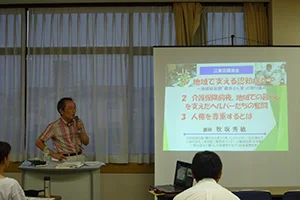
The guiding principles of Fujii-san's House are: ① Put service users at the center, supporting them in leading their own lives, making their own decisions and choices, and expressing their wishes. ② Never suppress or restrict their dignity and freedom as human beings. ③ Strive to maintain and improve their existing abilities and functioning. ④ Empower service users and help them explore their potential. Makisaka put these principles into practice by renovating a 75-year-old house in Omuta, transforming it into a community welfare center that also serves as a gathering place for local residents, and launching a day care service for people with dementia.
Staff respond to each person's feelings and support them in doing what they want and are able to do, so that they can be themselves. They also help people interact with others in the community and continue their everyday lives.
We were deeply moved by the video and felt it would be wonderful to see similar initiatives put into practice, even on a small scale, in many other communities. What are human rights? What is dignity? Human rights include the right to education and welfare services, freedom from discrimination, freedom of thought and belief, and freedom to choose one's occupation. Dignity means honoring each individual, their life story, and their very existence with profound respect.